


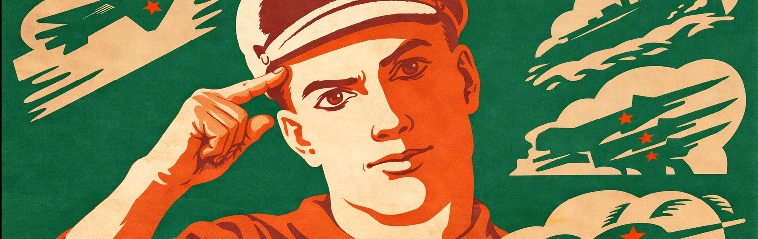
Belarus is tightening repression by linking passports and driving licences to military registration, directly targeting conscientious objectors.
From 11 February 2026, amendments to Presidential Decree No. 200 on administrative procedures come into force in Belarus. The changes were introduced by Alexander Lukashenko’s Decree No. 5 of 9 January 2026. They form part of a systematic tightening of state policy toward men of conscription age and are effectively aimed at increasing pressure on conscientious objectors.
Despite years of resistance to militarisation and forced conscription, Belarusian conscientious objectors continue to maintain an invisible but resilient form of civic resistance. It is precisely this ongoing resistance that compels the state to introduce ever new repressive regulations.
Core of the legislative changes
Men aged 18 to 27 must now present a certificate on their military status in order to obtain or renew civil documents and permits.
Without this certificate it is impossible to:
- obtain or exchange a passport or ID card;
- apply for a biometric passport;
- obtain or exchange a driving licence;
- restore a revoked driving licence.
Access to basic civil rights is thus made directly dependent on interaction with the military authorities.
Legal framework
The military certificate has been introduced as a new administrative procedure:
- issued by a military commissariat or the state security authority (KGB);
- issued within one working day;
- valid for six months;
- provided free of charge.
Formally, the measure is presented as an “optimisation of procedures.” In reality, it institutionalises a direct linkage between civilian life and the military control system over Belarusian men of conscription age.
Who is affected first
First vulnerable group
Men with the NGM category – unfit for service in peacetime, limited fitness in wartime – who are subject to regular medical re-examinations.
Now:
- they must report to the military office when applying for documents;
- they receive a summons for re-examination;
- without undergoing the procedure, the certificate is not issued;
- without the certificate, documents are not issued.
Previously, they could legally obtain documents without visiting the military office. This possibility has now been completely eliminated.
Administrative procedures have thus been transformed into a mechanism of forced involvement in the system of military control.
Second vulnerable group
The second vulnerable group consists of men who consciously and consistently seek not to serve in the army – above all, conscientious objectors.
These are people who, for moral, ethical, religious, or anti-war reasons, reject participation in the military system and therefore try to minimise any contact with military authorities.
For them, the new rules have a distinctly repressive character. Where refusal could previously be realised through distancing from the system – avoiding contact unless legally compelled – the state is now deliberately destroying this possibility.
Passports, driving licences, and other civil documents have become instruments of coercion. Any attempt to preserve civic autonomy now automatically leads to forced involvement in military bureaucracy.
In practice, conscientious objectors are placed before a choice: either abandon basic civil rights and fall outside the system (including losing access to healthcare), or submit to the system of military control in Belarus. This shifts conscientious objection from a matter of civic conviction into a sphere of administrative and repressive pressure.
Thus, the new norm is aimed not only at formal registration of conscripts, but at the systematic suppression of non-violent resistance to militarisation.
Political meaning of the amendments
Through these changes, the state:
- increases administrative pressure on conscripts;
- closes the last legal spaces for non-violent refusal of military service;
- turns military registration into a regime of everyday civic coercion;
- uses passports, licences, and documents as tools of repression.
This is not simplification of procedures. It is the institutionalisation of repressive control over young Belarusian men.
Why this is happening
The war in Ukraine has shown both ordinary people and career military personnel that service in the army is not just another profession; it is a near-maximum likelihood of being killed in combat for someone else’s yacht. It is obvious that no one wants to fight, and even less so to fight in Ukraine.

That is why Belarusian conscientious objectors continue to resist, devising new methods and steps—quietly, individually, legally, and humanely. And it is precisely this resistance that forces the system to constantly intensify the pressure.
Conclusion
From 11 February 2026 onward, passports, driving licences, and civil documents in Belarus are окончательно transformed into instruments of military coercion.
The state no longer conceals that it views young men not as citizens, but as a mobilisable military resource subject to permanent control and discipline.
How to support us so that we can support them

Related articles:
 “Our House” Contributes to Writing UN Report on Conscientious Objectors to Military Service
 Conscientious Objectors and Deserters in Belarus: Facing Repression and Resistance
 Olga Karach became a member of the most reputable organization helping conscientious objectors to military service
 International webinar devoted to the problems of conscientious objectors and deserters of Belarus, Russia and Ukraine
 Movement of Conscientious Objectors listed as Foreign Agent in Russian Federation
 “Two in One”: Trials of Conscientious Objectors in Baranovichi and Stolin