


Belarusian refugee children with autism face severe exclusion in Lithuania, where trauma, legal barriers, and systemic neglect leave them without essential care.
Introduction:
Refugee children are among the most psychologically vulnerable populations in Europe, and Belarusian children in exile are no exception. Their exposure to political violence, instability, and systemic exclusion places them at heightened risk of developing serious and persistent mental health conditions.
-
According to the World Health Organization’s report “Health of Refugees and Migrants in the WHO European Region” (2018)1, children with refugee or asylum-seeking status are disproportionately affected by a wide range of mental health disorders. These include post-traumatic stress disorder (PTSD), depression, anxiety, conduct and attachment disorders, all of which are exacerbated by displacement, uncertainty, and disrupted family structures.
-
A particularly concerning trend is the prevalence of internalized mental health conditions. Many refugee children exhibit symptoms of chronic sadness, social withdrawal, silence, dissociation, and suicidal ideation, which often go unnoticed due to lack of specialist evaluation or cultural misunderstanding. These children are less likely to verbalize distress and more likely to internalize trauma, making early detection and intervention difficult.
-
Unaccompanied or undocumented children are among those most at risk. The constant fear of detention or deportation, combined with a lack of stable caregiving, leads to intense anxiety, sleep disorders, and emotional regression. These children often live in a state of “invisible crisis,” unable to access appropriate services due to their legal status.
This data paints a stark picture of unmet needs—particularly for children who fled Belarus with their families or alone, often after witnessing traumatic events or experiencing persecution. Without trauma-informed care, social reintegration, and access to specialized support, these children may carry lifelong psychological scars.
The Belarus-Specific Context:
-
According to UNICEF data from Belarus, up to 40% of adolescents intentionally conceal their psychological distress due to fear of punishment, misunderstanding, or further marginalization2.
-
For children in exile, this psychological burden is compounded. They endure a double trauma: the trauma of state repression (e.g. witnessing parental arrest, KGB raids, violence) and the trauma of forced displacement and uprootedness. These conditions often manifest in aggressive behavior, self-harm, psychosomatic symptoms, and emotional shutdown.
Case Study: Belarusian Refugee Children with Autism and Mental Health Conditions in Lithuania
Since 2020, Lithuania has received tens of thousands of Belarusian refugees fleeing political repression, threats of forced conscription, torture, and criminal prosecution. Among them are thousands of families with children, including those suffering from mental health disorders such as autism, schizophrenia, anxiety, and behavioral conditions.
At present, there is no exact data on the number of Belarusian refugee children residing in Lithuania, whose legal statuses vary widely — from officially recognized political refugees to undocumented minors and children living in the country irregularly. However, it can be estimated that their total number is at least between 10,000 and 15,000. This is a significant group, far too large to be overlooked. It is fair to say that all of these children, regardless of their legal status, have been deeply affected by the socio-political context of Belarus and by the experience of forced displacement.
Particularly vulnerable are children without permanent residence permits, those seeking asylum, or those entirely undocumented. Their access to medical, educational, and social services is severely restricted. Lithuania’s state adaptation programs not only fail to meet their needs but often ignore their very existence.
Due to a hostile and deeply exclusionary state policy toward Belarusian migrants and refugees, this group remains nearly invisible and systematically excluded from institutional support. Assistance to Belarusian refugees is provided only on a residual basis—after other refugee groups have received help. A hierarchy of “deserving” and “undesirable” nationalities has taken root in Lithuanian practice, and Belarusians are consistently placed at the bottom, sidelined and neglected.
This exclusion is supported by numerous facts and data. It has led to the silencing and erasure of the specific challenges Belarusians face—particularly in international and institutional discussions on refugee protection. Even programs designed to study the situation of refugee children in Lithuania often fail to include Belarusian children in their scope.
The situation is especially tragic and alarming for Belarusian refugee children with autism and other mental health disorders—many of which are trauma-related. These children have often endured severe psychological distress, including the arrest or imprisonment of one or both parents, nighttime raids by the Belarusian KGB, forced displacement, and threats of violence. And yet, they remain entirely invisible to Lithuanian institutions, UN agencies, and international donors.
For example:
“Refugee Children’s Experiences and Wellbeing in Lithuania” (2023)3 – a report conducted under the project “Child Rights and Child Protection in Transit”, funded by the Nordic Council of Ministers, surveyed 53 refugee children and 86 parents, along with interviews with teachers and social workers. The data was collected between September and December 2023. Of those surveyed, 97% of the families were from Ukraine. Additional interviews and focus groups were held with refugees from Syria, Iraq, Ethiopia, Gambia, and Russia.
Despite the fact that there were 62,165 Belarusian4 nationals officially residing in Lithuania at that time, not a single Belarusian refugee child was included in the study.
This is especially concerning given that refugee populations from Syria, Iraq, Gambia, and Ethiopia in Lithuania number only in the hundreds or low thousands—while Belarusians constitute the second-largest refugee and migrant group in the country.
The exclusion of Belarusian children with disabilities from such studies and support programs suggests that they are being treated as an undesirable group. Their needs are rendered invisible not only to the Lithuanian state but also to international actors such as the Nordic Council of Ministers.
Given that many Belarusian families cannot return home due to the threat of political repression, the erasure of their children’s mental health struggles amounts to a deliberate silence. There is an urgent need to recognize and address the specific trauma and vulnerabilities of Belarusian refugee children—particularly those living with autism and other psychological disorders—in all national and international protection frameworks.
Even in specialized and detailed reports dedicated to Belarusian refugees in Lithuania and other countries, there is no separate analysis focused on Belarusian refugee children with mental health disorders in Lithuania—such as autism, schizophrenia, anxiety disorders, panic attacks, or post-traumatic stress disorder. These issues are not addressed either within the education system or the healthcare system.
For example, the report “Civil Society in Exile”5, prepared by the Centre for Conflict Analysis and Prevention (CAPC) and the German Association of Psychosocial Centres for Refugees and Victims of Torture (BAfF), includes interviews with Belarusian relocants in Lithuania, Georgia, Ukraine, and Poland. It explores psychological trauma caused by political repression and forced emigration.
Lithuania is mentioned repeatedly and analyzed as one of the main destinations for Belarusians fleeing after 2020. The report is based on interviews with respondents from Lithuania and highlights the difficulties faced by Belarusian relocants, including families with children. For instance:
-
The report includes quotes from Belarusian mothers who fled to Lithuania with their children, describing how their children had been exposed to threats of gunfire, lived in violent environments, witnessed dead bodies, hid from raids, and experienced severe psychological trauma while still in Belarus.
-
One case describes a Belarusian mother who feared that Lithuanian child protection services would remove her children, despite the fact that she had fled political persecution. It is known that over 1,200 Belarusian children have been at risk of removal in Belarus due to their mothers’ involvement in human rights, journalism, or activism.
The report further describes Lithuania as a country that provides only limited support, even to adult Belarusian refugees. For example:
-
In Lithuania, 67.75% of Belarusian relocants held temporary residence permits, 14.58% had humanitarian visas, and only 8% had refugee status. Legalization requires documented proof of persecution, which is not always possible. Some Belarusians arrived in Lithuania without any documents at all—not even passports.
-
Psychological assistance is insufficient, often short-term, lacks systemic coordination, and is not adapted to the needs of families with children. The report particularly highlights the critical shortage of professionals trained to work with children traumatized by torture, threats of removal, physical violence, and other forms of abuse.
-
16% of Belarusians in Lithuania reported direct experiences of discrimination, including being denied housing and banking services, as well as encountering widespread institutional mistrust.
While the BAfF report analyzes important aspects of the Belarusian refugee experience in Lithuania—such as trauma, legal challenges, and discrimination—it does not systematically address the situation of children with mental health conditions. It provides no data on access to education, healthcare, support for undocumented families, or family-based assistance in Lithuania.
In fact, no studies currently exist that specifically examine the situation of Belarusian children with mental health disorders in Lithuania. This is a critical gap in both national and international research and policy.
Barriers to Education, Social Benefits, and Healthcare for Belarusian Refugee Children with Mental Health Disorders in Lithuania
1. Education and Inclusion: A Gap Between Law and Practice
As of 1 September 2024, Lithuanian law mandates that every child, including children with disabilities, must be granted access to education in the nearest public school6. In theory, this includes inclusive education with support from speech therapists, psychologists, social pedagogues, and classroom assistants.
In practice, however, significant implementation gaps persist, particularly for refugee children with mental health conditions. Key barriers include:
-
Severe shortage of qualified professionals: Many schools lack sufficient psychologists, speech therapists, and assistants. Although these roles are legally mandated, staff are frequently unavailable or overburdened.
-
Age-limited access to services: Free state-funded autism spectrum disorder (ASD) therapy is generally available only to children under age 8, leaving older children without continued support.
-
Systemic weaknesses in inclusive education: While Lithuania has a multi-level support framework, it is underfunded and inconsistently implemented—especially in relation to psychosocial disabilities such as schizophrenia, anxiety, or trauma-related conditions.
-
Legal versus practical access: Though the Law on Education guarantees schooling for all children, regardless of nationality or legal status, undocumented or temporarily resident children face major barriers in enrollment and access to specialized services.
2. Additional Disadvantages Faced by Belarusian Refugee Children
Belarusian children with psychosocial and neurodevelopmental disabilities are further marginalized by systemic and cultural obstacles:
-
Lack of outreach and awareness: Families from Belarus are often unaware of how to access special needs services. Proactive outreach mechanisms are largely absent.
-
Language and cultural exclusion: A lack of Russian- or Belarusian-language materials and trained interpreters hinders parental involvement and limits the effectiveness of therapy.
-
Lack of trauma-informed care: Belarusian children often suffer complex trauma due to repression, flight, or family separation. Schools and professionals lack training to recognize or respond to these issues.
- Exclusion based on residency status: Access to many education-related benefits and specialized support services is tied to permanent residence (PR), which many Belarusian children lack.
These conditions represent systemic violations of:
- Article 24 of the UN Convention on the Rights of Persons with Disabilities (right to inclusive education),
- Article 28 of the UN Convention on the Rights of the Child (right to education without discrimination), and
- Article 14 of the European Social Charter (right to specialized educational support).
3. Social Benefits, Legal Status, and Access to Medical and Psychological Support
Belarusian refugee children with disabilities face systemic exclusion from essential social protection mechanisms. Lithuanian law provides additional disability-related benefits, but access is restricted to those holding permanent residence (PR). Children with temporary residence (TRP), asylum-seeker status, or no documents are excluded, leaving many Belarusian families in economic hardship.
Universal child benefits (vaiko pinigai) of €122.50/month are paid to children under 18 (or 23 if in education). A supplementary €72.10 is available for children with disabilities or from low-income/multiple-child families—but again, only for those with eligible residency status7. Asylum seekers and undocumented refugees are generally excluded.
Children in asylum procedures are theoretically entitled to free healthcare and basic social services via reception centers. However, access to specialized mental health support remains severely limited due to:
- Shortage of professionals: There is a national deficit of child psychiatrists and psychologists, especially outside major cities. Lithuania’s child mental health capacity falls short of OECD benchmarks.
- Age-based exclusions: Children over age 8 are not eligible for free ASD therapy, even when clinical needs persist.
- Barriers to disability recognition: Only children with PR can be formally recognized as disabled and access corresponding services. Asylum-seeking children—whose cases can remain undecided for up to 18 months—are often denied services or remain invisible to the system.
Lithuania lacks the infrastructure necessary for the meaningful inclusion of children with chronic psychiatric and neurodevelopmental conditions. Key deficiencies include:
- No national integration strategy for children with mental health conditions.
- No state-supported training for parents on how to raise and support children with psychological disabilities.
- Lack of teacher training in inclusive and trauma-informed educational approaches.
- Absence of family support programs, particularly for single mothers.
- No specialized enrichment or development programs for children with psychiatric conditions.
- No national system of rehabilitation tailored to child mental health.
In the education system:
- Support from school psychologists and pedagogues is often unavailable.
- Classroom assistants are legally required but rarely assigned.
- After age 8, children lose access to publicly funded ASD therapy.
In the healthcare system:
- Psychiatric facilities can serve fewer than 200 children annually, despite a national estimated need of 5,0008.
-
According to the OECD report “The Provision of Community-Based Mental Health Care in Lithuania,” as of 2018, there were only 102 inpatient psychiatric beds available for children and adolescents across five healthcare institutions in the country. This limited capacity indicates that fewer than 200 children can receive inpatient psychiatric care annually, given the average length of stay and bed turnover rates.
-
While precise national estimates are scarce, international studies suggest that approximately 10% of children and adolescents experience mental health disorders requiring clinical intervention. Applying this prevalence rate to Lithuania’s youth population implies that around 5,000 children and adolescents may need psychiatric services annually. This figure underscores a significant gap between service capacity and potential demand.
-
The disparity between the limited capacity of psychiatric facilities and the estimated need highlights a critical shortfall in Lithuania’s mental health infrastructure for children and adolescents. This gap may lead to unmet mental health needs, delayed treatment, and exacerbation of psychiatric conditions among the youth population.
-
Addressing this issue requires strategic investment in expanding inpatient and outpatient psychiatric services, training mental health professionals specializing in child and adolescent care, and implementing community-based interventions to bridge the service gap.
- No access to sanatorium-based rehabilitation for refugee children.
-
No mental health services in Russian or Belarusian, creating language-based exclusion.
These systemic failures constitute structural discrimination and violate:
- Articles 23 and 24 of the UN Convention on the Rights of the Child, and
- Articles 11 and 13 of the Revised European Social Charter.
Urgent reforms are needed to ensure that all children in Lithuania—regardless of nationality, legal status, or language—can access their right to education, health, and dignity.
4. Family Support and Stigmatization
Belarusian refugee families raising children with mental health conditions face acute emotional, informational, and structural challenges. These families—most often headed by single mothers—bear the brunt of care responsibilities in an environment that offers little institutional support and pervasive social stigmatization.
Emotional and Structural Burden
The lack of tailored services, accessible information, and culturally appropriate guidance contributes to chronic stress and emotional exhaustion among parents. Many feel unprepared to handle their children’s behavioral crises or psychological distress, and often express fear of their own child’s unpredictable or aggressive behavior. Without clear communication channels with healthcare or educational professionals, they are left to navigate complex challenges in isolation.
Fear and Institutional Distrust
Belarusian families are frequently reluctant to seek help due to the fear of being blamed for their child’s condition or behavior. Many have past experiences of persecution in Belarus, including threats of child removal for political or activist involvement. In Lithuania, similar fears persist: some Belarusian parents report being threatened by child protection authorities or treated with suspicion by police and social workers when crises arise.
Cultural and Linguistic Barriers
There is a complete absence of cultural mediators, or parent support programs adapted to Belarusian refugee communities. Without Belarusian & Russian-language materials or trauma-informed consultation, parents struggle to access even basic mental health guidance. The lack of targeted outreach increases confusion, anxiety, and alienation.
Gendered Impact and Economic Strain
Most caregiving is performed by Belarusian mothers, many of whom are raising children alone after partners left due to the pressures of exile. These women often face economic insecurity, as full-time caregiving prevents them from working. Without access to disability-related support or respite services, the burden becomes unsustainable.
Knowledge Gaps and Inaccessible Expertise
Due to the lack of public education or training for Belarusian caregivers of children with mental health disabilities, parents must search for information in foreign languages or across fragmented sources. Professionals in schools, clinics, or child protection services rarely provide guidance on how to manage psychiatric crises, ensure social inclusion, or support long-term development.
As noted by the World Health Organization: “Post-migration stressors are strongly associated with the development of depression and other mental health disorders.”
Lack of Data and Invisibility
No official statistics exist regarding the living conditions of Belarusian families raising children with mental health disorders in exile. However, community-based knowledge confirms that these families are primarily single-parent households, disproportionately affected by poverty, isolation, and burnout. Their needs remain invisible to national and international actors alike.
5. Prevalence of Bullying in Lithuanian Schools and Increased Vulnerability of Belarusian Refugee Children with Mental Health Disorders
Lithuania has consistently reported high rates of bullying among school-aged children. According to the Health Behavior in School-aged Children (HBSC) study conducted by the World Health Organization, Lithuania ranks among the highest in Europe for school bullying incidents. Specifically, 32% of 13-year-old boys and 31% of girls reported experiencing bullying9.
Further studies indicate that approximately 52.3% of Lithuanian adolescents have been involved in bullying, either as victims, perpetrators, or both10. These figures underscore a pervasive issue within the Lithuanian school system.
Belarusian refugee children with mental health disorders are particularly susceptible to bullying due to multiple intersecting vulnerabilities:
-
Refugee Status: As newcomers, these children often face language barriers, cultural differences, and social isolation, making them easy targets for bullying.
-
Mental Health Challenges: Conditions such as autism spectrum disorders, PTSD, and anxiety can impair social interactions and coping mechanisms, further increasing the risk of victimization.
-
Lack of Support Systems: Limited access to mental health services and inclusive education exacerbates their vulnerability, leaving them without adequate support.
In a reported incident, a Belarusian refugee boy with autism was subjected to severe bullying by his classmates, who forcibly undressed him and circulated photos of the incident. Such traumatic experiences can lead to profound psychological distress, including increased anxiety, depression, and social withdrawal.
Consequences of Bullying of Belarusian Refugee Children with Mental Health Disorders in Lithuania
The impact of bullying on children with mental health disorders is profound11:
- Psychological Effects: Increased risk of depression, anxiety, and suicidal ideation.
- Educational Impact: Decreased academic performance, school avoidance, and higher dropout rates.
- Social Isolation: Difficulty forming peer relationships, leading to further marginalization.
5. Lack of Inclusive Socialization Opportunities
Beyond the school environment, Belarusian refugee children with mental health disorders in Lithuania often lack access to inclusive extracurricular activities:
- Financial Constraints: Many families cannot afford paid programs that cater to children with special needs.
- Safety Concerns: Parents, especially those who have experienced trauma, may be hesitant to allow their children to engage in community activities without adequate support.
- Language Barriers: Limited availability of programs in Russian or Belarusian further restricts participation.
6. Recommendations and Perspectives
To address the systemic exclusion and unmet needs of Belarusian refugee children with mental health conditions in Lithuania, a coordinated and multifaceted response is urgently required. The following key actions are recommended:
A. Policy and Legal Reform
-
-
Develop and implement a national strategy for the integration and socialization of children with mental health disorders, including Belarusian refugees and undocumented children.
-
Ensure equal access to disability-related benefits, caregiver allowances, and therapeutic services regardless of residence status or documentation.
-
Expand eligibility for autism-related therapy for Belarusian refugee children beyond age 8, guaranteeing continuity of care until at least age 18.
-
Establish legal safeguards to prevent the unlawful separation of children from families and create legal aid mechanisms for Belarusian families at risk.
-
B. Support for Families and Education Systems
-
-
Introduce trauma-informed training programs for Belarusian parents and educators, focusing on behavioral intervention and inclusive teaching methods.
-
Provide culturally adapted psychoeducation and peer support for Belarusian parents, especially single mothers.
-
Train school and healthcare staff to recognize and respond to trauma, exile-related stress, and the consequences of torture in children.
-
Implement comprehensive anti-bullying policies that specifically protect refugee and neurodivergent children in schools.
-
C. Mental Health Infrastructure
-
-
Increase funding and deployment of child-focused mental health professionals, particularly in rural and underserved areas.
-
Support and empower Belarusian-led rehabilitation and community centers that offer psychological, social, and recreational services for children with psychosocial disabilities.
-
Develop mental health services in the family’s primary language, ensuring accessibility for non-Lithuanian-speaking families.
-
D. Social Inclusion and Community-Based Integration
-
-
Promote inclusive and affordable extracurricular activities, creating safe spaces for refugee children with mental health conditions to socialize and build friendships.
-
Foster community engagement and trust, encouraging cooperation between schools, refugee families, and local institutions.
-
E. Transparency and Institutional Cooperation
-
-
Collect and publish disaggregated data on Belarusian refugee children with psychosocial disabilities, including access to education, healthcare, and benefits.
-
Establish structured dialogue mechanisms between civil society organizations and government ministries to co-develop a National Action Plan on refugee child mental health.
-
Acknowledge and address institutional stigma: Criticism of policy gaps must not result in the exclusion or marginalization of NGOs. Constructive engagement with civil society is essential to democratic and inclusive reform.
-
Conclusion
Addressing the compounded vulnerabilities of Belarusian refugee children with mental health disorders requires a comprehensive, trauma-informed, and rights-based approach. Educational institutions, social services, healthcare systems, and policymakers must act in concert to ensure these children are protected, supported, and included. Inclusive policies, adequate funding, and genuine cooperation with Belarusian-led civil society are essential to achieving long-term impact and dignity for every child.
Effective implementation of these recommendations requires cross-sectoral cooperation and the meaningful participation of Belarusian civil society organizations such as Our House. Lithuanian authorities must demonstrate institutional maturity by responding to constructive criticism with dialogue and inclusion—not with hostility and not with attacks.
3 https://gelbekitvaikus.lt/wp-content/uploads/2024/06/%D0%9E%D0%BF%D1%8B%D1%82-%D0%B8-%D0%B1%D0%BB%D0%B0%D0%B3%D0%BE%D0%BF%D0%BE%D0%BB%D1%83%D1%87%D0%B8%D0%B5-%D0%B4%D0%B5%D1%82%D0%B5%D0%B9-%D0%B1%D0%B5%D0%B6%D0%B5%D0%BD%D1%86%D0%B5%D0%B2-%D0%B2-%D0%9B%D0%B8%D1%82%D0%B2%D0%B5.pdf
6 https://www.liberties.eu/en/stories/lithuania-giving-children-with-disabilities-opportunity-to-study-with-peers/43914
8 https://www.oecd.org/content/dam/oecd/en/publications/reports/2022/07/the-provision-of-community-based-mental-health-care-in-lithuania_3c11f47d/18de24d5-en.pdf
9 https://www.lrt.lt/en/news-in-english/19/1180226/lithuanian-adolescents-among-most-bullied-in-europe-who-survey?srsltid=AfmBOoo85oOA0f24o7-Hhw-IRiiDpnIREmsj7oC9u3luDvIHHhKvsSTJ
11 https://www.sciencedirect.com/science/article/pii/S2590291121000474
Credits https://unsplash.com/@anniespratt
Related articles:
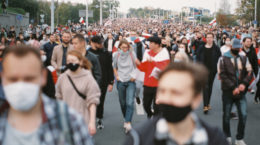 Report on the situation of Belarusian refugees in Lithuania
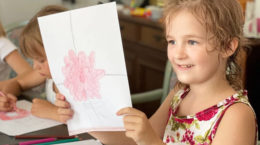 Belarusian women political refugees in Lithuania: problems, challenges, opportunities
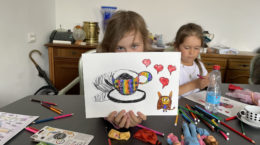 Women’s self-help: free hobby clubs in Our House for Ukrainian and Belarusian children refugees in Lithuania.
 Report on the situation of Belarusian Conscientious Objectors and draft evaders in Lithuania
 Our House and Maisto Bankas: we help providing food to Belarusian refugees in Lithuania.
 Belarusian refugees were assisted to collect their children for school